Showing posts with label church. Show all posts

Friday, March 14, 2014

a breathing


The End of Sleep

The eyes are about to open.
Through fog, Sleep crosses the great water—
See how it sails in the little boat?
Slowly, such a long journey,
Bits of light
Catch colors in the mirrored hull.
Beneath the glassy surface, a glimpse
Of your dreams: the lake, the boat, with you
In it. Now a shadow
Falls over you: above the surface,
The figure of Sleep
Has leaned over its boat.
Hear Sleep's feet plop in the shallows—
It pulls the boat to shore.

      -- Elizabeth Twiddy
This morning as I neared the shore of full consciousness, what I saw through the fog was myself, getting dressed and going to church for a Presanctified Liturgy. I was full of happy anticipation. Then I pulled the blinds open and was surprised to see, not the sunny and warm skies of the last few days, but thick and cold white fog.

I've read many people who say they love the fog, and I thought of them right away, wondering why I couldn't be like them. Then I remembered the foggy days of my childhood when in the winter the damp cold would settle over California's Central Valley like a perverse blanket. Not your normal blanket that makes you cozy, but something more like a conduit of chill. My fifth-grade teacher Mrs. Wicks, who came from South Dakota, said she was never so miserable in the dry winters of her youth as she was in our "temperate" weather that froze her to the bone.

The natural and normal tule fog that emerges from the ground after the first winter rains became a dangerous foe once I learned to drive and became aware of all the car crashes on the highways that are a frequent accompaniment to the season. I became familiar with the stiff neck you get peering intently through the wall of white trying not to run into something.

But this morning in March, all of that is far behind me, and for the Valley-dwellers it is likely passed as well by this time of year. So I thought I would look for a poem by one of those fog-lovers. The fog that's outside my window is still a little too cold for my old bones to thoroughly enjoy, but I'm working on it. After all, it's another part of our earthly home that is filled with the breath of God.
The Breathing

An absolute
patience.
Trees stand
up to their knees in
fog. The fog
slowly flows
uphill.
White
cobwebs, the grass
leaning where deer
have looked for apples.
The woods
from brook to where
the top of the hill looks
over the fog send up
not one bird.
So absolute, it is
no other than
happiness itself, a breathing
too quiet to hear.

    ~ Denise Levertov

Wednesday, March 12, 2014

Pressing on to the wasteland.

Another good quote for Lent, thanks to s-p at Pithless Thoughts (posted a while back), from a Malcolm Muggeridge essay on life at the end of the last century. It seems to me still applicable in the 21st, as he describes how direly we need the Savior:
As the astronauts soar into the vast eternities of space, on earth the garbage piles higher, as the groves of academe extend their domain, their alumni’s arms reach lower, as the phallic cult spreads, so does impotence. In great wealth, great poverty; in health, sickness, in numbers, deception. Gorging, left hungry; sedated, left restless; telling all, hiding all; in flesh united, forever separate. So we press on through the valley of abundance that leads to the wasteland of satiety, passing through the gardens of fantasy; seeking happiness ever more ardently, and finding despair ever more surely.

Monday, March 10, 2014

On the ground with the White Horse.


Last week The Garners posted about G.K. Chesterton's Ballad of the White Horse, which caused me to dig out my cassette tapes of the author reading his own poem -- how thrilling! Too bad they were made from a scratchy recording so that it's very hard to appreciate the poem itself. Still, the directness of the connection to the very voice and person of the poet mean a lot to me.

What made me interested in the Ballad in the first place was taking a trip to Britain with daughter Pippin nine years ago. We both very much wanted to see White Horse Hill in Uffington while we were there, and we found it quite empty of any other humans the day we visited. We hiked up the hill to the chalk art that is thought to be 2,000 to 3,000 years old, and wandered around the horse's anatomy. We couldn't pull ourselves away. I just could not get over -- here it is again -- the earthy material link to ancient peoples and the mysteries of their culture and history.

One thing we share with the ancient people who carved the trenches of this design is human nature, the gifts of the Creator who made us in His image, glorious even in a tarnished condition. The horse reveals the creative aspect of that image, and Chesterton's ballad shows his own artistry while it tells a human and Christian tale set in King Alfred's day. The imagery in this stanza, which I think pertinent to the Lenten season, illuminates another aspect of our humanity that we share with our ancestors: the impulse to stand before God in worship, fighting with the desire to be God:
Pride juggles with her toppling towers,

They strike the sun and cease,

But the firm feet of humility

They grip the ground like trees.  

                       -G.K. Chesterton, The Ballad of the White Horse
Thinking again about this world history and my history, I want to revisit the horse vicariously, by means of the poem slightly more removed from the poet than my old cassettes. So I just ordered this edition of the book, which I think is the one I bought two copies of in the past for gifts. The American Chesterton Society will be sending me this CD, read by Aidan Mackey, who sounds as though he is very likely, once I put that disk in the player, to send me right back to England and White Horse Hill.

Linking up to Weekends With Chesterton

Saturday, March 8, 2014

Things that might - and did - happen in March.

1 - My sister might send us a box of mandarins from California's Central Valley. She and her husband grow these very fancy Dekopons, as they are known in Japan, under the label Sumo. You aren't likely to see many of them in our U.S. stores for a while, but I just read that in Japan they already have Dekopon chewing gum.

They are awfully good, large and seedless and easy to peel, with a taste that reminds me of the fruits that we children gorged on from our father's trees many decades ago, and which I still will savor if I get down there at the right time of year.

2 - I might decide to make a giant pot of vegetable and bean soup to last us through Lent and beyond. This is the Bean Soup Mix after soaking all night. The small brown beans are Tepary beans I bought at a farmers' market years ago; I found them in the pantry and threw them into the lot.


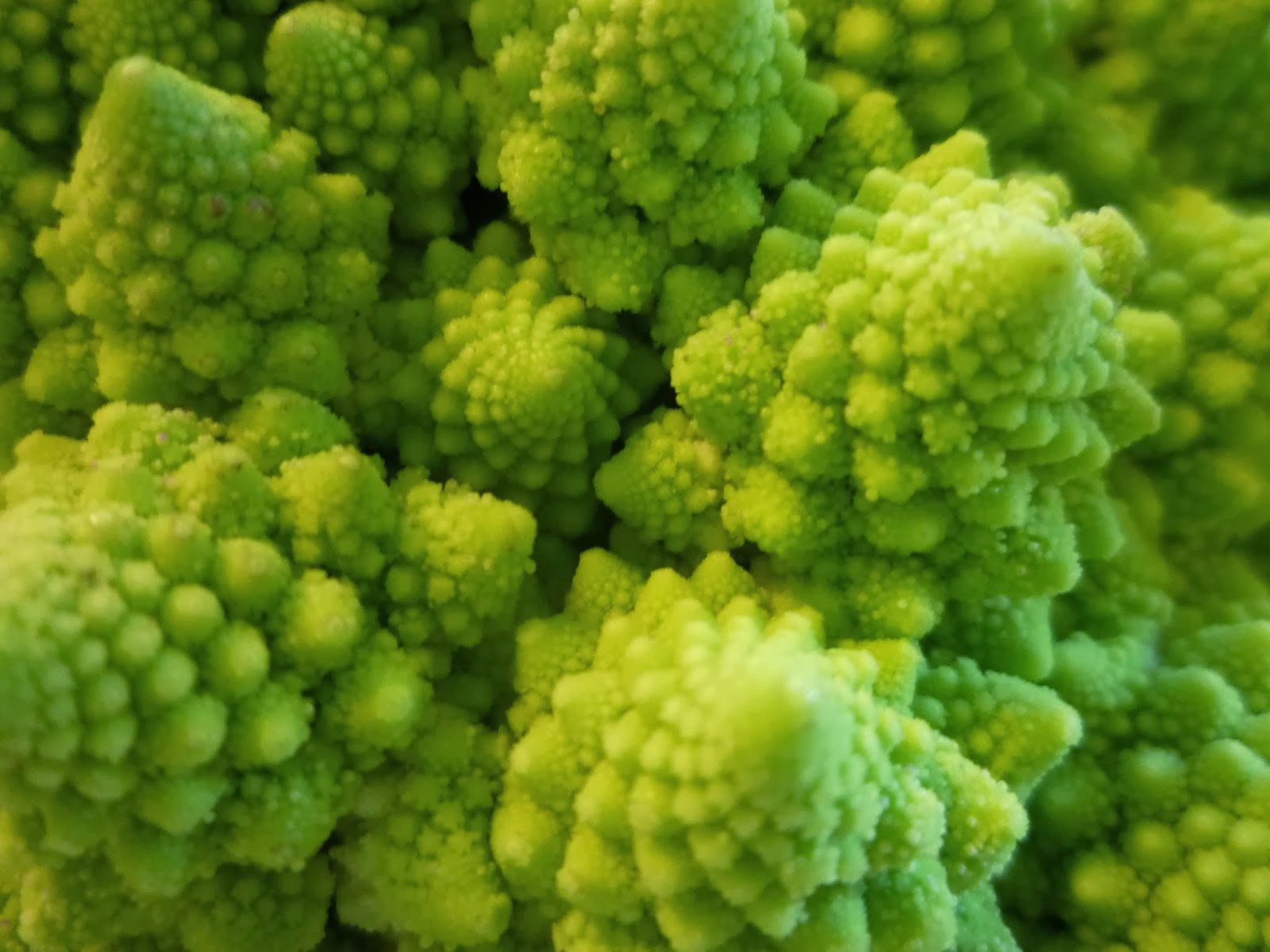
3 - My CSA box might contain a pale green and spikey cauliflower, which they call Romanesco. I chopped it up put it into the soup, so I don't know if it tastes any different from the usual cauliflower. But it looks interesting.


4 - The osmanthus might bloom, so that when I come up the sidewalk to the front door I swoon over its sweetness, and decide to cut some branches to bring inside.

It's warm enough now that I felt safe sticking two of my old orchids out on the patio; the only one that bloomed I put in the garage. I've gotten so used to them, I might buy a blooming plant to have in the house if Costco is still selling them.

All these things DID happen. I'm loving Lent and Spring.

Thursday, March 6, 2014

the satisfaction of pride

This poem would have been perfect for the Sunday of the Publican and the Pharisee, but I don't want to wait another year to post it. Anyway, something on pride is very fitting for Lent.

The Seven Deadly Sins

Forget about the other six, says Pride.
They’re only using you.
Admittedly, Lust is a looker,
but you can do better.

And why do they keep bringing us
to this cheesy dive?
The food’s so bad that even Gluttony
can’t finish his meal.

Notice how Avarice
keeps refilling his glass
whenever he thinks we’re not looking,
while Envy eyes your plate.

Hell, we’re not even done, and Anger
is already arguing about the bill.
I’m the only one who
ever leaves a decent tip.

Let them all go, the losers!
It’s a relief to see Sloth’s
fat ass go out the door.
But stick around. I have a story

that not everyone appreciates—
about the special satisfaction
of staying on board as the last
grubby lifeboat pushes away.

-- Dana Gioia


Published in First Things Aug/Sept 2010

Tuesday, March 4, 2014

Challenge the great Liar.

Often I don't have the words or confidence to write about Orthodox spirituality, so today I am just going to quote Fr. Schmemann, whose books have helped me so much.
 ...fasting is the only means by which man recovers his true spiritual nature. It is not a theoretical but truly a practical challenge to the great Liar who managed to convince us that we depend on bread alone and built all human knowledge, science, and existence on that lie. Fasting is a denunciation of that lie and also proof that it is a lie....
....
Let us understand ...that what the Church wants us to do during Lent is to seek the enrichment of our spiritual and intellectual inner world, to read and to meditate upon those things which are most likely to help us recover that inner world and its joy. Of that joy, of the true vocation of man, the one that is fulfilled inside and not outside, the 'modern world' gives us no taste today; yet without it, without the understanding of Lent as a journey into the depth of our humanity, Lent loses its meaning.

from Great Lent by Father Alexander Schmemann

Saturday, March 1, 2014

getting at the heart of our humanity

This Sunday is Forgiveness Sunday, the last day before Great Lent in the Orthodox Church. During Lent we pray more, give alms, forgive everyone, and generally try to focus on spiritual things and prepare our hearts to receive the grace of the Resurrection of Christ. And of course we fast. We remember the expulsion of Adam and Eve from the Garden of Eden. This connection is explained well in many articles, one of which I read this week on the blog On Behalf of All. Here are a few excerpts:
    The spiritual discipline of fasting is something that has been part of the religious life of man since the very beginning. In the Paradise of Eden, the Lord commanded Adam: “From every tree that is in the paradise you may eat for food, but from the tree for knowing good and evil, you will not eat from it. And on whichever day you eat from it, you will surely die” (Gen. 2:16-17).
....
      Adam was meant to abstain; he was meant to fast. He was meant to say “no” to his own desires, so the he could say “yes” to God. We don’t fast in order to “merit” anything from the Lord, but rather to become like God, imitating Christ in his 40-day struggle in the wilderness. And when Christ was tempted by Satan (as all those who are engaged in Christian fasting will experience), his reliance upon both prayer and the promises of God were enough to sustain him.
....
      When the apostle tells the Galatians, “Walk in the Spirit, and ye shall not fulfill the lust of the flesh. For the flesh lusteth against the Spirit, and the Spirit against the flesh: and these are contrary the one to the other: so that ye cannot do the things that ye would” (Gal. 5:16-17), he shows us yet again that we are “at war” with our own flesh or desires; the “lust of the flesh.” In order to be spiritually renewed as a Christian (and into a true human being, as Christ), one must strive to place the importance of that which is eternal over the temporal desires and passions that tempt us (and which Satan and his minions use to tempt us).
     The purpose of fasting is not dieting or carnal in nature, but rather gets to the heart of what it means to be truly human. Our relationship with the Father was distorted in the Garden, and only through true spiritual renewal—such as can be experienced through the ascetic discipline of fasting, coupled with both prayer and almsgiving—can one “grow” to become greater than one’s flesh.
Read the whole article here.

East and West will celebrate Easter on the same date this year, so I know many of you will be beginning your labors just a couple of days later than I, on Ash Wednesday. I pray the Lord will strengthen us all and bring us with joy to Pascha!

Friday, February 28, 2014

RFC drinks in graces.

It was St. Thomas, I think, who pointed out a long time ago that if God wanted to get rid of the universe, He would not have to do anything; He would have to stop doing something. Wine is -- the fruit of the vine stands in act, outside of nothing -- because it is His very present pleasure to have it so. The creative act is contemporary, intimate, and immediate to each part, parcel and period of the world.
     ...The bloom of yeast lies upon the grapeskins year after year because He likes it; C6H12O6=2C2H5OH+CO2 is a dependable process because, every September, He says, That was nice; do it again.
     Let us pause and drink to that.
Robert Farrar Capon knows well that there are people who will not drink to anything, because they are teetotalers. He's writing this chapter on "Water in Excelsis," in the book The Supper of the Lamb, about a God Who delights in his creation, and he is not sympathetic to what he sees as a mistaken attitude: "Only the ungrateful or the purblind can fail to see that sugar in the grape and yeast on the skins is a divine idea, not a human one."

And as for what he calls The Woman's Christian Temperance Union's version of The Lord's Supper, only about 100 years old and lacking completely what Holy Scripture and church tradition prescribe as the proper drink, he does not shrink back from engaging its adherents in argument, particularly the ones who think that the Greek word for wine in the Gospels meant something other than wine.
The commentator cited, as I recall, grape juice for one meaning, and raisin paste for another. He inclined, ultimately, toward the latter.
     I suppose such people are blessed with reverent minds which prevent them from drawing irreverent conclusions. I myself, however, could never resist the temptation to read raisin paste for wine in the story of the Miracle of Cana. "When the ruler of the feast had tasted the water that was made raisin paste...he said unto the bridegroom, 'Every man at the beginning doth set forth good raisin paste, and when men have well drunk [eaten? -- the text is no doubt corrupt], then that which is worse: but thou hast kept the good raisin paste until now.'" Does it not whet your appetite for the critical opera omnia of such an author, where he will freely have at the length and breadth of Scripture? Can you not see his promised land flowing with peanut butter and jelly; his apocalypse, in which the great whore Babylon is given the cup of the ginger ale of the fierceness of the wrath of God?
Capon has a different argument with secularists, and it is over their classifying wine as an alcoholic beverage, when the author knows it as a class in itself, far removed from the hard liquor that is often used to ill effect, and which he tells us is "for strong souls after great dinners." Capon:
With wine at hand, the good man concerns himself, not with getting drunk, but with drinking in all the natural delectabilities of wine: taste, color, bouquet; its manifold graces; the way it complements food and enhances conversation; and its sovereign power to turn evenings into occasions, to lift eating beyond nourishment to conviviality, and to bring the race, for a few hours at least, to that happy state where men are wise and women beautiful, and even one's children begin to look promising.
I admit I am inspired by RFC's eager receptivity to God's gifts. What little appreciation I've had for wine as a beverage has been slow in developing, and I let my husband be in charge of that aspect of our dining. But wine in the chalice of Holy Communion has always seemed to me the obvious choice in obedience to Christ's teaching.

This chapter contains more and expanded theologizing about the secular and the sacred, using wine and the making of wine as a demonstration of the goodness and delight of God. I am still musing on much of this and hope to ramble on here again, sharing with you the infectious loves of Robert Farrar Capon.

Other posts in this series are:
RFC is the man we need.
RFC begins with the meat.
RFC considers blood and sacrifice.
RFC makes one of nature's marvels.
RFC for Butter Week

Thursday, February 27, 2014

a little dancing sister


...Nature is not our mother: Nature is our sister. We can be proud of her beauty, since we have the same father; but she has no authority over us; we have to admire, but not to imitate. This gives to the typically Christian pleasure in this earth a strange touch of lightness that is almost frivolity. Nature was a solemn mother to the worshipers of Isis and Cybele. Nature was a solemn mother to Wordsworth or to Emerson. But Nature is not solemn to Francis of Assisi or to George Herbert. To St. Francis, Nature is a sister, and even a younger sister: a little, dancing sister, to be laughed at as well as loved.
        ― G.K. Chesterton, Orthodoxy
I've been enjoying my little sister in the garden this week. It started with a long weeding session, during which I rescued the sweet peas from a weed of which I don't know the name. Does one of you know it?

 
It's been growing taller than the peas, and even though I made some nice trellising for them, they have been confused by these weeds and are trying to climb on them instead.

The green and trailing weed is also flowering before the sweet peas bloom, and is not in any way an unpleasant weed to deal with.
  
How about this weed? Maybe someone can tell me its real name. We call it The Scattery Weed, because before the seeds are obviously ripe, when the plant still looks small and innocent, it waits with secret menace for the gardener to stroll by and brush it with her shoe or hand, then !!explosion!! of seeds in a several-foot radius.

I probably shouldn't use the word menace when talking about my little sister. In this case she is only doing what is in her nature, and doing a good job of bearing many children for next year's springtime.


I found more signs of spring while I was out there, like this oxalis blooming among the violets...


...plum blossoms decorating violets, and the violets springing up tall to decorate an irrigation head.


Above is a field of manzanita blossoms fallen from the bush to make way for berries, and hanging over them are snowdrops, truly looking like little sisters dancing in their pretty spring petticoats.

I finished my garden work just ahead of the steady rain we've been getting today. God is watering the earth and sending His rain "on the just and the unjust." Thank You, Lord!


Linking up to Weekends With Chesterton.